Dear Reader,
There’s a treasure worth up to $1.6 trillion sitting under American soil.
And Elon Musk needs it.
It’s the metal every one of his batteries starts with. The metal he still has to buy from someone else.
I’ve found a small company sitting on one of the largest deposits of it in the United States.
I believe Elon is about to make one of his biggest moves since the SpaceX IPO to get it.
And you can buy it in any brokerage account today.
To understand how I found it… you have to take a look at this photo.
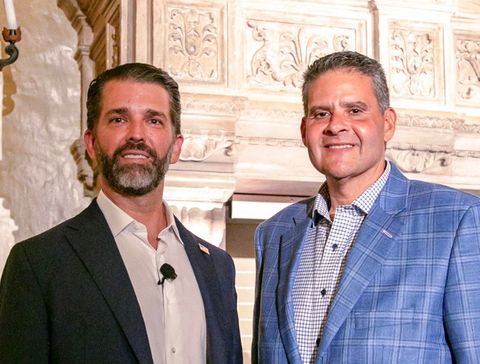
That’s me on the right.
And yes, that’s Donald Trump Jr. standing next to me.
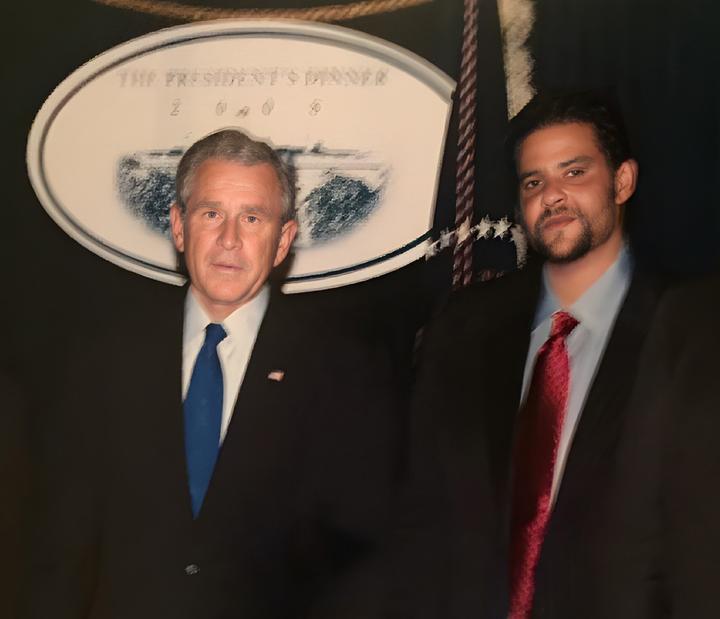
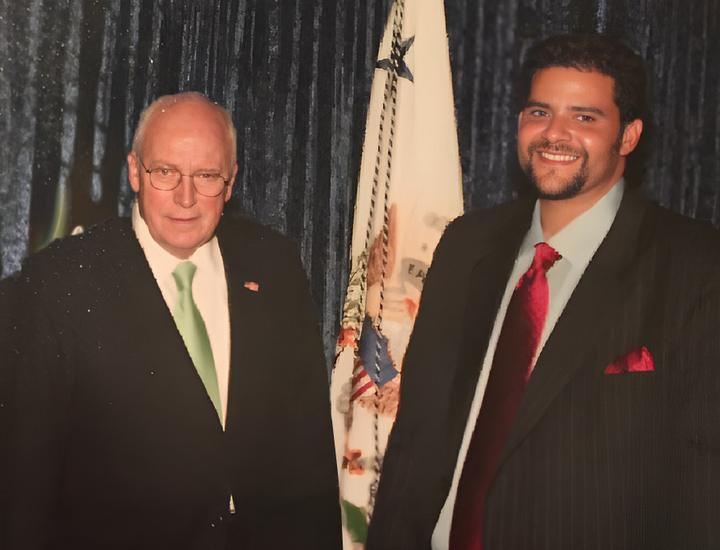
It’s not my first time standing with some of the most powerful people in the country, like when I met with President Bush and Vice President Cheney in 2006.
And this year, I’ve met personally with Congressman Brett Guthrie, Chairman of the House Energy and Commerce Committee.
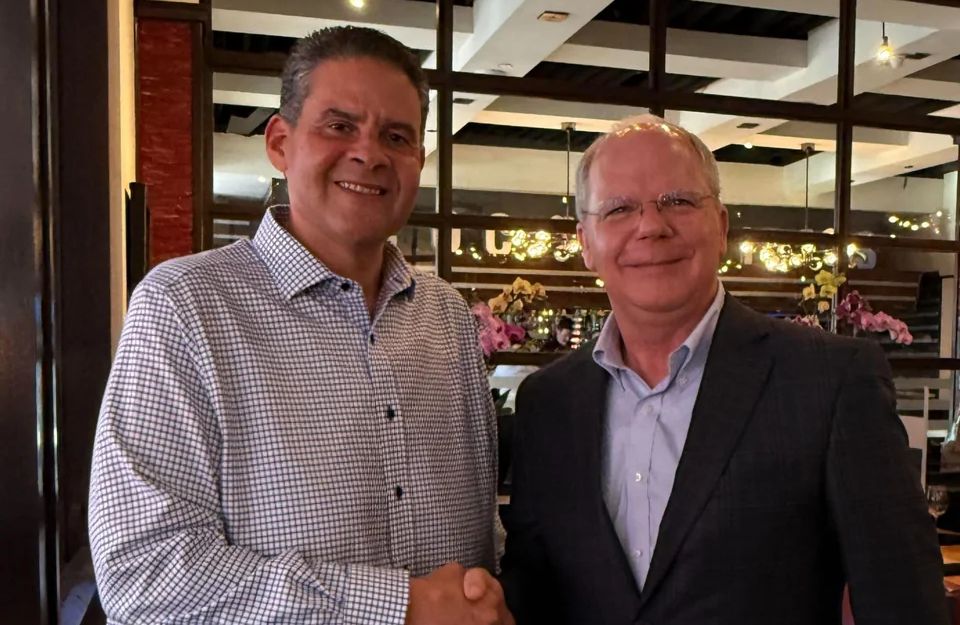
His committee holds jurisdiction over national energy policy, from the Department of Energy to the reliability of America’s power grid. As chairman, he sets its agenda.
Few investors ever sit across the table from the man who sets the House’s energy agenda. I have.
I’ve also met with Congressman Bill Huizenga, Vice Chairman of the House Financial Services Committee, which oversees the Federal Reserve and the Treasury.
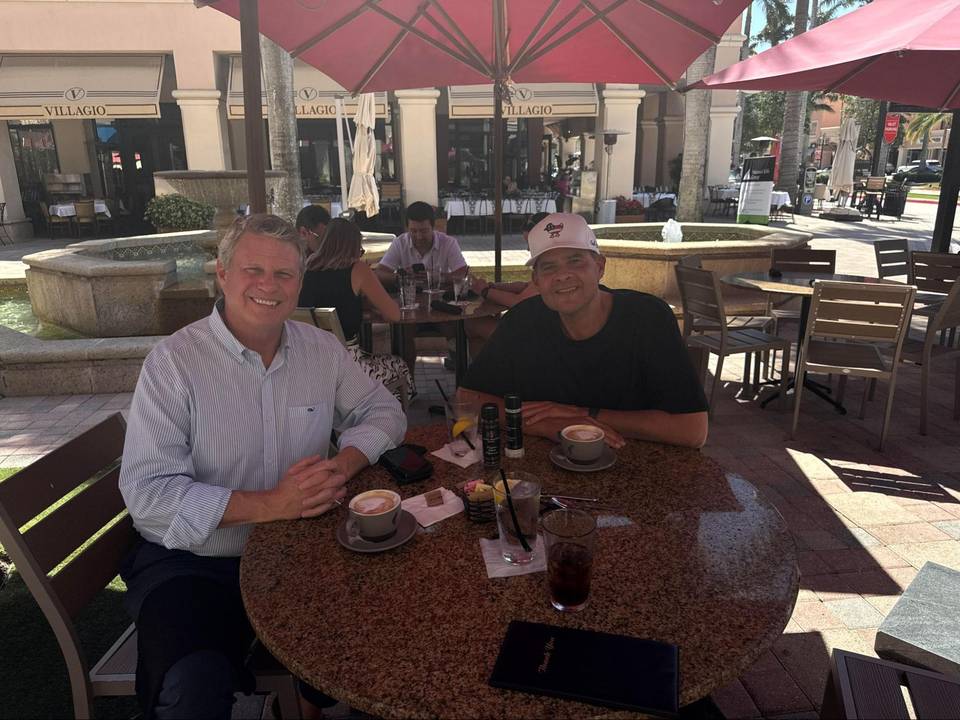
He also sits on the Foreign Affairs Committee, the committee with jurisdiction over the deployment of United States Armed Forces.
But this meeting with Don Jr. is even more significant.
Because this meeting changed everything about my plans for 2026.
You see, that picture was taken in October 2025, at a private dinner at The Breakers in Palm Beach, Florida, a stone’s throw from Mar-a-Lago.
No press was invited.
Just a small group of Wall Street heavyweights, a few eight-figure investors and, as you can see, the son of the President of the United States.
I won’t tell you exactly what we discussed.
But I’ll tell you this. I was there for hours.
And that conversation set me on a mission over the past year…
A mission I’m now sharing the fruits of with you, right here, right now.
What I’m About to Share Could Change Everything You Know About Making Money
I’m going to show you exactly what I discovered when I followed up on Trump Jr.’s tip.
First, I’m going to give you a free ticker symbol that puts the whole boom in this metal into your brokerage account today. The miners, the refiners, the battery makers, even Tesla itself, in one investment.
Then I’m going to show you why a small public company is about to be swept up in Elon’s next move.
When I look at the math, the upside is staggering.
If this stock captures even a fraction of what the last boom in this metal did for one small producer, we’re looking at 500% to 1,000% gains.
A $10,000 position could become $60,000. $110,000. Possibly more.
$10,000 Invested Could Become...
And there’s a faster way this could pay off.
If Elon does what I think he’s going to do, what he’s done before when he needed something he couldn’t make himself, he could buy the company outright. And the stock could jump overnight.
Those are my forecasts. The evidence behind them is on the record: a government study, signed buyers and the company’s own numbers.
In 35 years, I’ve never seen a setup this lopsided in our favor.
And I’m going to show you how to position yourself before December 31st, the last day before Washington raises the share of a grid battery’s parts that has to come from outside China.
What Elon Still Has to Buy
Look at Tesla’s cars and its giant battery-storage systems.
Different products. The same essential ingredient.
A metal that has to come from somewhere.
And the more batteries Elon’s businesses need, the more of that metal they have to secure.
By his own company’s math, the world will need about 4 times as much of it every year as every mine on Earth produced last year.
That’s why I’m looking at the companies that can supply it.
Especially the small public company I’ve found sitting on part of that American treasure.
I believe owning that company before its next major milestone is where the opportunity lies.
But recognizing what a giant needs is only part of the equation.
The other part is getting into position before a major announcement sends everyone else looking for the stock.
The Problem:You Find Out Last
By then, investors closer to the business can already have a substantial head start.
Look at what happened with Nebius.
Nine months before Nebius announced its enormous Microsoft deal, Nvidia had already agreed to invest in the company.
Nebius rents out computing power for artificial intelligence.
Nvidia supplies the chips that power its data centers.
In December 2024, Nvidia and a group of other investors put up $700 million for 33.3 million new shares. The price was $21 a share.
On September 8th, 2025, Microsoft agreed to pay about $17.4 billion over 5 years for computing power from a new Nebius data center in New Jersey.
Microsoft needed what Nebius had.
The next day, Nebius shares closed at $95.72. That’s 356% above the $21 Nvidia and the other investors paid.
Nebius Group
356% GAIN
And the run kept going. In June 2026, Nebius went as high as $299.86, a 1,328% gain on paper from that $21 price.
Nebius Group
1,328% GAIN
If you had bought after the announcement, at $95.72, your gain would have been 213%.
We’re talking about a profit difference of more than $55,000 for every $5,000 invested depending on whether you bought early, with Nvidia at $21… or bought with the crowd at $95.72.
It happens with the metals Washington needs, too.
In August 2024, China announced limits on its exports of antimony, a metal used in ammunition.
Michael McManus sits on the board of United States Antimony.
On November 18th, 2024, he bought 50,000 shares at roughly 56 cents each.
Just 15 days later, China banned antimony exports to the United States.
The following September, the Pentagon’s Defense Logistics Agency picked United States Antimony to help refill America’s defense stockpile.
The company runs North America’s only two antimony smelters.
Within 3 weeks, its shares went as high as $19.71.
That’s a 3,388% gain on paper from McManus’s price, in less than 11 months.
United States Antimony
3,388% GAIN
Some of the biggest fortunes I’ve ever seen were made by owning the small company sitting on what a giant needs, before anyone noticed.
In stories like these, there are two groups of investors.
The first group buys while the company is still quiet.
The second group hears about it when a big announcement finally makes the news.
Maybe you’ve been in the second group yourself.
You finally come across a compelling story.
You look up the stock.
The chart has already gone vertical.
Now you have to decide whether to chase the price, or watch and wonder whether another fortune is leaving without you.
Chase it, and you pay the new price.
Wait, and the run can go on without you.
By then, someone else already owns shares bought at a fraction of the price you’re being asked to pay.
If you’ve ever wondered why your investments haven’t performed the way you’d hoped, even when you picked “good” companies, this is why.
It’s not your fault.
The purchases were in the public record.
The advantage was recognizing their significance before the next major announcement.
Your Way Into the First Group
But here’s the good news.
This time, you don’t have to find out last.
You can be in the first group.
The company I’ve found already has signed customers.
Washington and Wall Street are backing it with real money.
But its biggest milestone, the decision to start building its first plant, is still ahead.
I believe that’s the kind of announcement that brings in the second group.
You Can Be in the First Group
I’ve already done the work.
I’ve identified the company.
I’ve read its filings.
I’ve studied its project, its customers and its numbers.
And I’ve put all of it into research that’s ready for you today.
You don’t need to be an insider.
You don’t need a contact on Wall Street.
All you need is a regular brokerage account.
Here’s the opportunity I want you to examine.
A company sitting on part of a treasure Elon needs.
A company priced for a plan, not a plant.
A company you can buy right now, today, for the price of a nice dinner.
If you’ve spent years reading about fortunes after the move, here’s the difference. This time, I’m putting the research in your hands while the next major milestone is still ahead.
You can learn the company’s name, see what I believe it’s worth, and decide whether to own it before that milestone arrives.
Before Washington raises the bar.
Before the repricing.
Before Elon makes his move.
And I’m going to give you everything you need to start taking action today, beginning with a free ticker that puts the whole boom in this metal into your brokerage account before January 1st.
But you need to act quickly.
Because the window is closing.
What Happens on January 1st
Let me tell you about a date.
December 31st, 2026.
It’s the last day a grid battery project can start construction under this year’s rules.
Here’s how it works.
When a utility or a data center builds a giant battery like Tesla’s Megapack, Washington can cover as much as half the cost with a tax credit.
But in July 2025, Congress attached a condition.
To collect the credit, a battery project has to show that a minimum share of the cost of what goes inside it, from the battery cells to the equipment around them, comes from companies outside China’s control.
For projects that start construction this year, that minimum is 55%.
On January 1st, it rises to 60%.
Then 65%, then 70%, then 75%. Every January through 2030, the bar goes up.
Every January The Bar Goes Up
And it doesn’t stop at the battery.
The factories that make battery cells in America face their own version of the rule. To collect their federal credit, a minimum share of the materials they buy has to come from outside China’s control.
On January 1st, that minimum rises too, from 60% to 65%.
So the pressure runs straight down the chain.
To the cells, and to the materials inside them.
To the metal every one of them starts with.
Now look at Elon’s position.
In March, Electrek’s Fred Lambert reported that Tesla’s storage business relied almost entirely on cells sourced from China. Those cells already face U.S. tariffs as high as 82.4%.
This summer, Tesla shipped its first Megapacks with American-made cells, from its own factory in Nevada.
But its big order of cells made outside China doesn’t start arriving until August 2027. That’s 7 months after the bar goes up.
And Tesla placed that order in 2025, 2 full years before the first cell arrives.
That’s 7 Months After the Bar Goes Up
Companies commit to it years before they need the finished batteries.
That’s how supply gets bought in this business. Companies commit to it years before they need the finished batteries.
So the companies that can supply what qualifies get signed up early. And the market starts valuing them early, long before they ship a thing.
The company I’ve found is in that stretch right now.
Most of its first plant’s output is already under contract. Its engineering study is done.
The financing for its first plant is being arranged.
Its go-ahead to build is targeted for the end of this year.
Here’s what those dates mean.
For battery builders, January 1st is when the higher bar starts to bind. Supply that qualifies gets harder to find, and more valuable to whoever has it.
For the company, the go-ahead turns a contracted plan into a plant under construction.
And its partnership puts money on the calendar. If the go-ahead comes by January 1st, its energy-giant partner owes it a cash payment worth about a tenth of the company’s entire stock market value today.
If the decision slips past that date, the payment becomes subject to termination, pending negotiations. The company has every reason to move fast.
- The bar rises to 60%
- Go-ahead by January 1st = a cash payment worth about 1/10th of the company’s entire stock market value today
Most investors will hear about it on CNBC, after a go-ahead is announced. They’ll chase the stock after it has already moved.
The advantage in a story like this goes to whoever buys before the milestone, at today’s price. Not after it, at whatever Wall Street has left over.
That’s why I’m rushing this research to you now, while that advantage is still yours to take.
What I Discovered When I Got Home
Now let me tell you what happened after that dinner at The Breakers.
I couldn’t sleep that night.
I kept turning Trump Jr.’s words over in my head.
“The grid wasn’t built for this… two-year waiting list… whatever can feed electricity to these data centers fast enough.”

So I did what I’ve done for 35 years when someone gives me a thread worth pulling.
I started digging.
My first question was simple.
If the grid can’t keep up, what’s keeping Elon’s supercomputers running?
I studied the satellite photos of his AI supercomputers in Memphis, Tennessee.
Part of the answer was lined up right beside them.
Walls of giant Tesla batteries, standing by for the moment the power fails.
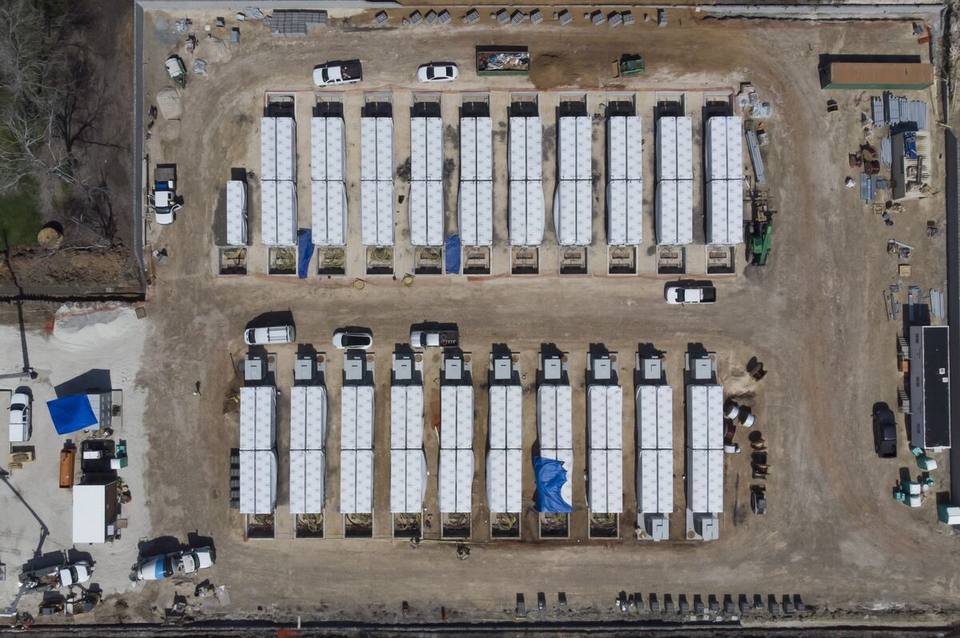
That raised my second question. What goes into those batteries, and who controls it?
So I went through Tesla’s filings with the SEC, line by line.
That’s where I found Elon’s dependence. In writing.
Which led to my third question. Where could Elon get what he needs from a source he controls, outside China’s reach?
That question led me to a government study, a treasure under American soil, and one small public company holding part of it.
What I found confirmed everything Trump Jr. told me.
And it revealed something Wall Street still hasn’t priced.
The Problem Hiding in Plain Sight
You see, when Elon built his first Colossus supercomputer in Memphis, the local grid couldn’t keep up.
Doug McGowan runs Memphis Light, Gas and Water, the city’s utility.
In January 2025, he told the Memphis City Council,
“It is a physics problem, not a political problem, about how much energy can be provided here.”

So Elon did what Elon does.
He didn’t wait.
He brought in gas generators. And he lined his supercomputers with giant Tesla batteries.
Batteries that keep the site running through outages, and smooth out the sudden surges when the computers spike.
Here’s the problem nobody in Memphis was talking about.
Every one of those batteries runs on lithium.
Lithium is the metal inside the battery in your phone, your laptop and almost every electric car on the road.
And Elon still has to buy his from someone else.
There’s a sentence in Tesla’s latest annual report that most investors skipped right past.
It says Tesla relies on suppliers such as Panasonic and China’s CATL for the cells inside its batteries.
We will need to maintain and significantly grow our access to battery cells, including through the development and manufacture of our own cells, and control our related costs.
We are dependent on the continued supply of lithium-ion battery cells for our vehicles and energy storage products, and we will require substantially more cells to grow our business according to our plans. Currently, we rely on suppliers such as Panasonic and Contemporary Amperex Technology Co. Limited (CATL) for these cells. We have to date fully qualified only a very limited number of such suppliers and have limited flexibility in changing suppliers. Any disruption in the supply of battery cells from our suppliers could limit production of our vehicles and energy storage products. In the long term, we intend to supplement cells from our suppliers with cells manufactured by us, which we believe will be more efficient, manufacturable at greater volumes and more cost-effective than currently available cells. However, our efforts to develop and manufacture such battery cells have required, and may continue to require, significant investments, and there can be no assurance that we will be able to achieve these targets in the timeframes that we have planned or at all. If we are unable to do so, we may have to curtail our planned vehicle and energy storage product production or procure additional cells from suppliers at potentially greater costs, either of which may harm our business and operating results.
Think about that.
Tesla, the company that built the Gigafactory, still relies on other companies for its battery cells. One of them is Chinese.
And every one of those cells starts with lithium.
Even Elon’s new Texas refinery runs on ore Tesla buys from mines in Canada and Australia.
For the giant batteries beside his supercomputers, it’s worse.
They’re built on a lithium powder called LFP, and according to the International Energy Agency, China makes 95% or more of it.
China
They makes 95% or more of lithium powder
Here’s what that means in plain English.
Elon can’t build his future on a metal he has to buy from someone else.
Especially when China controls most of what happens to it before it reaches him.
That’s why I believe Elon’s next move is acquiring a lithium jackpot. An American lithium source he would own and control.
And I believe that jackpot is sitting under American soil right now.
The Small Company Sitting on What Elon Needs
Here’s what nobody at that dinner knew.
Here’s what CNBC hasn’t put together, and what the share price still doesn’t reflect.
There is a small public company sitting on part of a lithium treasure under American soil.
And it has already done the hard part.
For 6 years, it has run a demonstration plant that pulls lithium out of salty water pumped up from deep underground. That’s 6 years of operating evidence, not a lab result.
The old way of getting lithium out of that kind of water takes a year or more. This company’s process does it in hours, and I’ll show you how.
The old way
a year or more
This company’s process
in hours
Two global buyers have already signed up for most of its first plant’s output. Washington, a global energy giant and Wall Street investors have put money behind it.
Next comes the step that changes how Wall Street values a company like this. Government-backed lenders are reviewing the loan package to build the first plant, and the final go-ahead is targeted for the end of this year.
Once a plant is going up, with its output already contracted, the market stops pricing a plan and starts pricing a business. In my experience, that’s where the big repricing begins.
Right now, even with that money behind it, the company is priced as if its plant may never get built.
I’ve spent months building a complete report on it. I’ll show you the money lining up behind this company, and what my analysis says each share is worth if the plan comes together.
And history shows what happens to a company at exactly this step.
History Shows What Happens When the World Wakes Up to a Resource
When the world suddenly needs a resource it took for granted, the companies sitting on it get repriced.
Here are 3 real examples. Each one shows a different part of the pattern.
Cheniere Energy (LNG): The American Export Play
Cheniere set out to ship American natural gas to the world, from the first export terminal ever built in the Lower 48.
First, it signed up a buyer.
On October 26th, 2011, it announced the first contract ever for liquefied natural gas from the U.S. Gulf Coast. It covered 20 years of supply, for Britain’s BG Group.
That day, Cheniere’s stock jumped 69%.
Buyers in South Korea, India and Spain followed. Then, in July 2012, with buyers signed for most of its planned capacity, Cheniere gave the final go-ahead to build its first two plants.
And the stock kept climbing.
From its close on the day that first contract was announced to its peak in 2014, Cheniere rose another 718%.
Every $10,000 invested that day became about $81,800.
Its first export cargo didn’t sail until February 2016.
Investors didn’t wait for the gas to flow. They paid up as the buyers signed, the money came in and the terminal went up.
Cheniere Energy
718% GAIN
Look at what lithium did for two Australian producers.
Mineral Resources (MIN): The Miner That Went Big on Lithium
Mineral Resources is an Australian miner that bet big on lithium.
By 2023, its lithium mines were earning it a record A$1.3 billion a year, about three-quarters of its operating earnings.
Its stock went from A$6.60 in June 2015 to A$71.43 by June 2023.
That’s a 982% gain, measured in Australian dollars.
Every A$10,000 invested would have grown to about A$108,200.
Mineral Resources
982% GAIN
Pilbara Minerals (PLS): The Small Producer
Pilbara Minerals dug lithium out of the Australian outback.
In its 2020 fiscal year, it lost A$99 million.
Then lithium prices spiked, Pilbara ramped up production, and in its 2023 fiscal year it earned A$2.4 billion.
In June 2020, its shares traded for about 25 Australian cents. By June 2023, they hit A$4.89.
That’s a 1,856% gain in 3 years.
Every A$10,000 invested would have grown to about A$195,600.
Pilbara Minerals
1,856% GAIN
Today it goes by PLS Group.
These weren’t rare, extraordinary examples that required perfect timing.
They’re what happens when the world suddenly needs a resource and the market wakes up to the few companies ready to supply it.
Cheniere shows you when the repricing starts. The buyers sign, the money comes in, and the stock moves long before the first shipment.
Mineral Resources shows you what lithium can do for a miner that bets big on it. Pilbara shows you how big it can get for a small producer once production arrives.
The company I’ve identified is earlier in its cycle than Mineral Resources or Pilbara were when they began their runs.
It hasn’t produced its first commercial ton yet. But its buyers have signed for most of its first plant’s output, and its go-ahead is targeted for the end of this year.
In late 2011, Cheniere had less than that, with one buyer signed and no go-ahead yet. Anyone who bought then still had a 718% run ahead.
The company I’ve found is smaller than Cheniere was, and far less followed.
And like Cheniere, it’s sitting on an American resource the world is about to need.
If the same repricing happens to this stock, if Wall Street simply starts paying for what this company is building, we could be looking at 500% to 1,000% gains or more.
That’s every $10,000 turning into $60,000 to $110,000.
Projected — not guaranteed
And remember what’s coming on January 1st.
The Clock Is Ticking
Once the bar rises on January 1st, I believe battery builders will be hunting for lithium that qualifies, and locking it up years in advance. This small company should be one of the first places they look.
Most investors will find out too late.
They’ll read about it in the Wall Street Journal after the stock has already doubled.
But you don’t have to be one of them.
I’m going to give you a free ticker that gets you into the whole lithium boom today. Then I’ll show you the research behind the one small company I believe could deliver the biggest gains of all.
To understand the scale of the demand behind this opportunity, look at what Elon has lined up in Memphis.
The Wall of Batteries in Memphis
To keep his AI from going dark, Elon has built a monster.
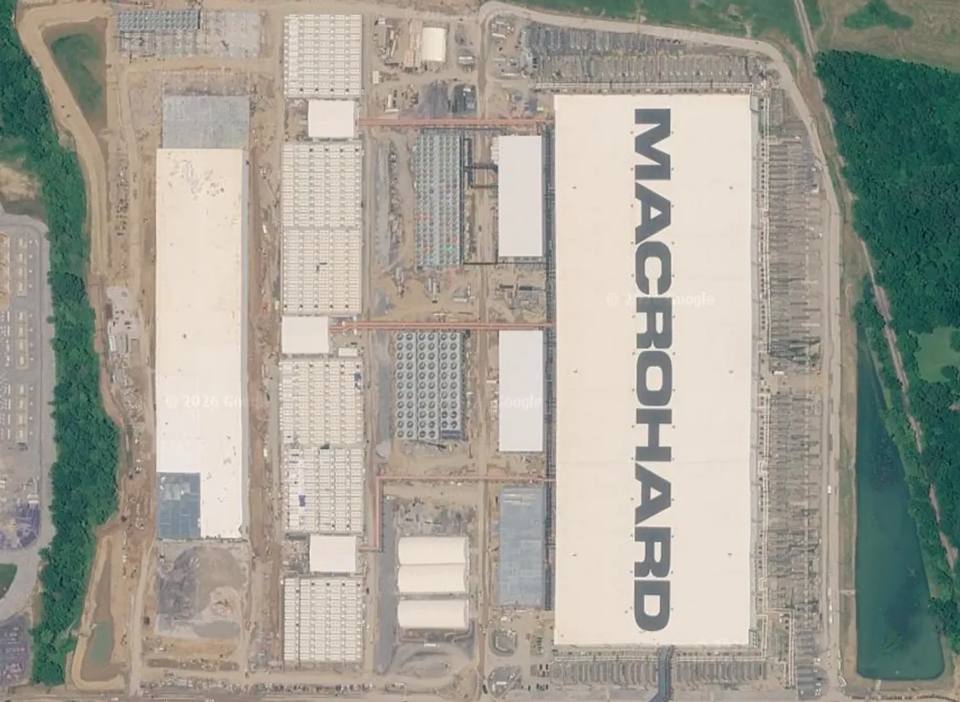
Satellite photos of his second Colossus supercomputer, taken on July 11th, tell the story.
Lined up beside it are 720 Tesla Megapack batteries.
Each one is a steel container packed with lithium battery cells.
Each is as long as a midsized city transit bus and weighs about as much as 17 Ford F-150 trucks stacked on top of each other.
Doug McGowan of Memphis Light, Gas and Water put it this way.
“It’s the world’s largest supercomputer today, but it’s also got the world’s largest grid-connected battery system.”

In February, SpaceX merged with Elon’s AI company, xAI.
SpaceX’s own energy developer, Riley Trettel, told the Tennessee Valley Authority’s board the battery could power all of Memphis for 2 hours.
That’s one wall of batteries big enough to back up an entire American city.
And Elon’s companies are still buying.
xAI bought $430 million worth of Megapacks in 2025, according to Tesla’s own SEC filing. In the first half of this year, the merged SpaceX bought hundreds of millions of dollars more.
Every one Elon buys adds to his lithium bill.
I believe every new supercomputer Elon builds will need a wall just like this one.
That’s why the AI boom is quietly turning into a battery boom.
And Elon isn’t the only one building it.
America’s power companies are racing to feed AI too.
One of them has raised its target for new data center demand on its grid by a third, with even more in advanced talks. Battery storage is the fastest-growing part of its backlog of new projects.
I’ve written a separate report on that company, and I’ll show you how to get it, too.
But every one of those batteries, Elon’s and theirs, starts with lithium.
Arkansas’ Hidden Treasure
Which brings us to the treasure itself.
On October 21st, 2024, the U.S. Geological Survey, the government’s own scientists, put out an announcement with a headline you don’t often see from a federal agency.

Unlocking Arkansas’ Hidden Treasure: USGS Uses Machine Learning to Show Large Lithium Potential in the Smackover Formation
Using artificial intelligence, the USGS mapped the lithium in the salty water deep under southwestern Arkansas.
Here’s what they found.
Between 5 and 19 million tons of lithium sit beneath southwestern Arkansas.
Even the low estimate is more than 9 times what the world’s electric cars are projected to need in 2030, according to the International Energy Agency’s forecast.
Katherine Knierim, the USGS hydrologist who led the study, put it plainly.
“We estimate there is enough dissolved lithium present in that region to replace U.S. imports of lithium and more.”

The industry measures lithium in carbonate terms. Converted that way, every ton of lithium in the ground equals more than 5 tons of lithium carbonate.
By my math, at today’s international price for battery-grade carbonate, that’s a treasure worth up to $1.6 trillion.
That’s the high end of the government’s estimate, valued in the ground. It isn’t a forecast of how much anyone will pull out.
That’s why I call it:
Elon’s $1.6 Trillion Hidden Treasure
The treasure is there. Now comes the part that matters to your brokerage account: the company working to turn it into battery-grade lithium.
Oil majors and chemical giants hold rights to other pieces of it. The company I’ve found holds the majority stake in its own piece, and it runs the project.
That piece is more than an estimate. The company’s full engineering study counts enough Proven reserves to keep its first plant running for 20 years.
And its opportunity doesn’t stop at the Arkansas line.
The USGS says the same ancient layer of rock and salty water runs under parts of 6 states, from Texas to Florida. The company’s second project, designed to produce about 3 times as much as its first, is in East Texas.
I’ll show you what my analysis says those 2 projects make each share worth.
To understand why those projects could matter to a buyer like Elon, look at the businesses driving his battery demand.
It reaches far beyond cars.
His robots.
His giant batteries.
His AI supercomputers.
Three expanding businesses, all tied to the same metal.
Three Empires, One Metal
Empire #1: The Robots
Elon has said Optimus, Tesla’s humanoid robot, could be the biggest product of all time.
In October 2025, Tesla said it was building a production line for 1 million Optimus robots a year.
Every one of them carries its own battery pack, built on the same supply chain as Tesla’s lithium-ion batteries.
And Elon isn’t stopping at a million.
At a conference in Saudi Arabia in October 2024, he predicted at least 10 billion humanoid robots on Earth by 2040.
That’s more robots than there are people.
Every one of them will need a battery. And every battery starts with lithium, the metal the company I’ve found is getting ready to produce.
Empire #2: The Megapacks
In 2025 alone, Tesla installed more than 14 times the battery storage lined up in Memphis.
And it’s speeding up. In the third quarter of this year by itself, it installed more than 4 times the Memphis wall.
In August, it started building its newest giant battery, Megapack 3, in Texas.
Utilities buy them. Data centers buy them.
And Elon’s own companies keep buying them by the hundreds.
Every Megapack runs on LFP battery cells. And LFP cells are typically made with lithium carbonate.
That’s the exact product the company I’ve found is preparing to make.
Empire #3: The AI Supercomputers
SpaceX’s supercomputers in Memphis already lean on that wall of 720 Megapacks.
And Elon is just getting started.
On its first earnings call as a public company, in August, SpaceX laid out plans for a massive expansion of its AI computing by the end of 2027.
If Memphis is any guide, more computing will mean more power to manage, and more Megapacks to back it up.
More Megapacks mean more demand for lithium carbonate, the same product the company I’ve found plans to make.
And that’s before you count the cars.
Tesla delivered more than 1.6 million of them in 2025. Every one runs on a lithium-ion battery.
Three Empires, and Every One of Them Depends on the Same Metal
Lithium
Now put the pieces side by side.
A treasure worth up to $1.6 trillion.
Three empires racing to use it.
And a small company sitting on part of it, priced at a fraction of what my analysis says its own projects make it worth.
The people backing this company already see what it’s building. Washington has finalized a nine-figure grant to help build its first plant.
Yet Wall Street still prices it as a development project. Not as the financed, operating business I believe it’s on its way to becoming.
That disconnect is where YOUR money gets made.
Why Now? The January 1st Clock
For years, Elon could buy all the lithium he needed from whoever had it.
That’s getting harder.
From January 1st, about 10 weeks away, a grid battery needs more of its parts from outside China to collect its federal credit. Beijing has already written export controls on battery materials, and paused them, for now.
And every one of Elon’s empires needs more lithium as it grows.
So the question for Elon is no longer what lithium costs. It’s who controls it.
He has already shown us how he answers that kind of question. Not in one interview, but in what he has posted, what he has built and what he has bought.
In poker, they call it a “tell.”
An unconscious behavior that reveals what someone is really holding.
A twitch.
A hesitation.
A decision that only makes sense if you know what’s coming next.
Elon Musk has given us 3 tells, and they all point the same way. He’s coming for a lithium source he can own and control.
Each one builds on the one before it. Together, they lead straight to the treasure under Arkansas.
Reading the Billionaire:Three Tells That Reveal Everything
Most investors wait for the press release, or the headline on CNBC.
By then, the earlier price is gone. The same money buys a much smaller position.
I’ve spent months analyzing every filing, every public statement and every move Elon Musk has made around lithium. Here’s what I found.
TELL #1: “A License to Print Money”
If you want to know what Elon Musk is going to do, don’t just listen to what he says.
Watch what he builds.
On April 8th, 2022, he posted on Twitter that the “price of lithium has gone to insane levels.”
He said Tesla might have to get into mining and refining lithium itself, at scale.
Most people heard a complaint.
I heard a tell.
On Tesla’s earnings call 3 months later, he went further.
“You can’t lose,” he said of refining lithium. “It’s a license to print money.”
And he didn’t just talk about it.
In January 2026, he posted, “The largest Lithium refinery in America is now operational.”
That’s commitment. Elon has already put Tesla’s own money into the lithium business.
But remember what that refinery runs on. Ore Tesla buys from mines in Canada and Australia.
So Elon controls the refinery. Its raw material still comes from other producers.
That’s the next link in the chain.
And a company building an American lithium source has exactly what Elon has already shown he’ll spend real money to secure.
A man doesn’t build what he calls America’s largest lithium refinery and keep buying his ore from other countries forever.
I believe the next step is a lithium source of his own.
TELL #2: The Arkansas Talks
In February 2023, Bloomberg reported that Tesla was weighing a takeover of a lithium miner, as it looked at refining the metal itself.

Tesla Is Considering a Bid for Battery Metals Miner
Neither company commented. No deal was ever announced.
But that evening, the miner’s shares jumped 21%.
In a single evening, a $25,000 investment would have paid $5,250. That’s more than the typical homeowner pays in a month for a mortgage and a car payment combined.
Everyone else read about it the next morning.
But the tell isn’t that one report. It’s where else Elon’s company was looking.
On July 31st, 2023, Bloomberg Law reported that ExxonMobil was in early talks with Tesla, Ford, Volkswagen and others about supplying them with lithium.

Exxon in Talks With Tesla, Ford, VW on Supplying Lithium
Lithium from where?
From the same treasure under southwestern Arkansas.
So in 2023, Tesla was already talking about Arkansas lithium. That’s where Elon’s company was looking for its next source of supply.
Now look at what’s happened there since.
In 2024, the government’s own scientists mapped the treasure.
This year, two global buyers signed long-term contracts for Arkansas lithium, with the company I’ve found.
And ExxonMobil, the oil giant Tesla was talking to, now says it aims to be a leading North American supplier of lithium carbonate “by the first half of the 2030s.”
When one of the biggest companies on Earth plans a lithium business on this resource, you know how seriously the industry takes it.
And Arkansas lithium has already been on Tesla’s shopping list. The question is who Elon buys it from.
But buying lithium from an oil giant is still buying it from someone else. And nobody buys ExxonMobil to get its lithium.
If Elon wants Arkansas lithium he controls, the obvious place to look is the company whose whole business is this resource.
It’s small enough to buy outright. And right now, you can own it at today’s price.
TELL #3: The “Last Critical Piece”
The final tell isn’t about lithium at all.
It’s about what Elon does when he can’t live without something.
For years, SpaceX needed a phone company’s airwaves to beam Starlink straight to people’s phones.
So SpaceX bought nationwide airwaves of its own from EchoStar. Regulators approved the $17 billion purchase this spring.
Then on October 8th, it agreed to buy another block from Grain Management.
Elon called it the “last critical piece.”
That’s the pattern.
When Elon can’t live without something, he doesn’t keep renting it from someone else. He owns it.
Even when it costs billions.
Now look at his battery empire.
He owns the car factories and the battery factories. He owns the refinery.
But every one of them still runs on lithium he has to buy.
Buying this company would give him the piece that’s missing.
- 1A strategic American lithium source he would own and operate, outside China’s control.
- 2One preparing to make lithium in the form his Megapacks run on.
- 3A first plant with its buyers already signed. A second, bigger project whose supply isn’t committed to anyone yet.
- 4And a federal tax credit worth 10% of the cost of every ton it produces in America, in full, through 2030.
I believe that’s the last critical piece of his battery empire.
And I believe it’s sitting under southwestern Arkansas.
Put the three tells together.
The first shows what Elon is willing to build.
The second shows where he has already looked.
The third shows what he does when one piece is missing.
And SpaceX showed us this month exactly what that looks like.
Now the countdown is raising the stakes on the missing piece of his battery empire.
The company I’ve found is targeting its go-ahead to build for the end of this year, and Washington raises the bar for his Megapacks on January 1st.
The only question left is how you get in before Elon does.
There are two ways I want you to look at this.
First, you can own a basket of the companies riding the whole lithium boom. I’ve found one ticker that lets you do it, and I’m going to give it to you free.
In the last lithium boom, that one ticker returned 211% in 2 years.
Then there’s the company I believe could deliver the biggest gains of all.
The small company sitting on part of Elon’s $1.6 Trillion Hidden Treasure.
Its name, ticker and buying instructions are inside my special report.
Finding the signal before the crowd arrives has defined my career. Let me show you the calls behind that conviction.
Who Is the Man Behind the Prediction?
Before I give you the free ticker symbol, it’s only fair that I answer a question you have every right to ask.
Who is the guy telling you all this?
And more importantly, why should you risk a single cent of your hard-earned money on his research, before the rest of Wall Street sees what he sees?
My name is Dylan Jovine.

I have been in the trenches of the financial world for 35 years.
I’ve seen boom cycles that made millionaires overnight, and I’ve seen bust cycles that wiped out fortunes before lunch.
Those cycles taught me the difference between a bubble and a breakthrough.
And they taught me the skill that matters most in a story like this one: recognizing a valuable change before the wider market acts on it. You have to see the turning point first, find the company that will collect on it, and get in before the crowd shows up.
And right now, my research is flashing the same “buy” signal I saw before some of the biggest wealth-creation events of the last three decades.
To understand why I’m so confident about Elon’s hidden treasure, you have to understand where I came from.
Because I am not your typical Wall Street analyst.
The Outsider Advantage
If you look at the biographies of most newsletter editors or fund managers, you see the same list of schools. Harvard, Wharton, Columbia, Penn.
They are groomed in the Ivy League, hired by the big banks, and taught to think exactly like everyone else.
That wasn’t my path.
I grew up poor.
I didn’t have a trust fund, and I didn’t have connections.
When I tried to break into Wall Street in my early 20s, none of the big “white shoe” firms wanted anything to do with me.
I didn’t fit the mold.
But that rejection turned out to be my greatest advantage.
Because I couldn’t rely on the “old boys’ club,” I had to rely on work.
I had to read more, dig deeper, and find the angles that the guys in the custom suits were too lazy to look for.
My break came when I met Peter Jacquith.
If you know your financial history, that name should mean something to you.
Peter was a legend. A senior banker at Lazard Frères who helped save New York City from bankruptcy in the 1970s.
He saw something in me that the other firms missed.
He became my mentor.
Under his guidance, I didn’t just learn how to analyze a balance sheet.
I learned how to see the narrative behind the numbers.
I learned that the market is often wrong, and that the biggest gains go to the people with the courage to bet against the consensus.
I didn’t let him down.
By age 24, I became one of the youngest people in American history to launch a registered broker-dealer and market maker.
I set up shop at 100 Wall Street, just a 10-minute walk from the New York Stock Exchange.

I was trading in the same league as Goldman Sachs veterans before I was old enough to rent a car without a surcharge.
The Prediction That Changed Everything
It’s easy to look like a genius in a bull market.
When everything is going up, a dart-throwing chimp can make money.
You find out who the real analysts are when the sky is falling.
My reputation wasn’t built during the easy times.
It was forged in the fire of the 2008 Financial Crisis.
A full 12 months before the crash, when the rest of the world was buying third homes and flipping condos, I issued a warning.
“The market has no place else to go but down. It’s not a question of ‘if’ it’s a question of ‘when.’”
I told anyone who would listen that the housing market was a house of cards.
I warned that the derivatives market was toxic.
I was laughed at.
I was called a pessimist.
Then, the world collapsed.
The 2008 meltdown vaporized $17 trillion in household wealth.
It wiped out nearly 20% of global GDP.
It destroyed retirement accounts and shuttered banks that had stood for a century.
But my clients were prepared.
And more importantly, because we saw it coming, we knew exactly when to get back in.
While the rest of the world was paralyzed by fear, I predicted the legendary market rebound that followed.
I told my readers that America wasn’t over, and that the best companies were on sale for pennies on the dollar.
Those who listened to me then saw life-changing gains:
646% on American Express in 4 years.
American Express
646% GAIN
700% on Starbucks in 5 years.
Starbucks
700% GAIN
459% on AutoNation in less than 6 years.
AutoNation
459% GAIN
235% on FactSet Research in under a decade.
FactSet Research
235% GAIN
These weren’t complex options trades or risky penny stocks.
These were American icons that Wall Street had left for dead.
We bought them when they were hated, and we rode them to massive profits.
Navigating the Modern Chaos
That was more than 15 years ago. So what have I done lately?
The market has changed, but human nature hasn’t.
The same patterns of fear and greed that drove 2008 are driving the market today.
When the COVID-19 pandemic swept the planet, panic set in again.
The herd ran for the exits.
But once again, I kept my head.
“FACT: When we get to the other side of this, the market will have a “SNAP-BACK” rally because prices and interest rates are so cheap.”
I helped my readers look past the lockdowns and identify the companies that would thrive in the “new normal.”
The results speak for themselves:
We saw 102% gains on PagSeguro in just 12 months.
PagSeguro
102% GAIN
We booked 186% on Floor & Decor in 2 years.
Floor & Decor
186% GAIN
We captured 101% on Magnolia Oil & Gas in a single year.
Magnolia Oil & Gas
101% GAIN
We hit 124% on DraftKings in just 8 months.
DraftKings
124% GAIN
And we saw a massive 250% on Scotts Miracle Gro in 2 years.
Scotts Miracle Gro
250% GAIN
The Calls That Came Before the Crowd
And over the last decade, I’ve made even bigger calls.
There are two ways to measure calls like these. The gains at the prices where I told readers to sell, and how far the business kept running afterward.
I recommended Intelsat, a satellite operator, in early 2018. My sell alert went out 4 months later, at a 394% gain.
Intelsat
394% GAIN
In 2024, quantum computing was still a punchline on trading desks. I recommended IonQ anyway.
Within 8 months, my alerts told readers to sell half for a 97% gain and the rest for 417%. After my last sell alert, IonQ kept running, to as high as 944% above my recommendation price.
IonQ
944% GAINSINCE RECOMMENDED
In 2022, the smart money had left Palantir for dead. I named it one of 5 companies changing modern warfare, and I recommended it to my Breakthrough Wealth readers.
Within about 2 years, my alerts said to sell half for a 222% gain and the rest for 408%. Palantir kept climbing after that, to as high as 2,712% above my recommendation price.
Palantir
2,712% GAINSINCE RECOMMENDED
In 2018, I recommended Axon, the company behind the Taser and the body cameras police wear. Just over 3 months later, my sell alert went out at a 128% gain.
Long after that sale, Axon climbed as high as 3,000% above my recommendation price.
Axon Enterprise
3,000% GAINSINCE RECOMMENDED
And in 2024, while Wall Street treated the entire space sector like a graveyard, I was tracking the military’s push into space. I recommended Rocket Lab at $3.80.
Within 8 months, my alerts told readers to sell half for a 154% gain and the rest for 431%. Rocket Lab kept going after my last sell alert, to as high as 3,800% above my recommendation price.
Rocket Lab
3,800% GAINSINCE RECOMMENDED
The first set of numbers is measured at my published sell prices. The second shows how exceptional these businesses were, and how early I found them.
These are real numbers. In every case, I saw the turn coming, found the company that would collect on it, and got in while Wall Street was still looking the other way.
Today, I see that same kind of turn in American lithium. And I’ve found the small company I believe will collect on it.
I’m proud of these calls, but I’m even prouder of the emails I get from the readers who acted on them.
Take Dr. Robert M., who has been following my recommendations for almost 20 years.
“I’ve been following Dylan’s recommendations for almost 20 years. His best idea made me 7 times my original investment.”
His best trade with me made him 7 times his original investment.
Or Rod Gray from Reno, Nevada, who wrote to tell me he was up “big time” on just 2 stocks in 60 days.
“Amazing!!! Have used your service since October 2019. Best & most professional service ever!!!”
And Brett from Boston, who told me,
“I have probably made a ton of money in the last three months because of Dylan.”
These aren’t hypotheticals.
These are real people, with real money, who trusted me with their portfolios.
Why You Can Trust Me on Elon’s Hidden Treasure
I’m sharing this track record with you for one reason.
I want you to understand that when I say December 31st is a critical date, I am not guessing.
I have spent 35 years refining a system that identifies these specific “dislocation events.” Moments when market prices move miles away from underlying value.
I saw it with the housing crash.
I saw it with the Covid rebound.
And I see it right now with the treasure under Arkansas.
The “smart money” is already positioning itself.
Rio Tinto, one of the biggest mining companies on Earth, spent $6.7 billion in 2025 to become a major lithium producer.
And Tesla has already been at the table for Arkansas lithium.
Big investors are already in the small company I’ve found.
But the retail public, people like you, are being left in the dark.
That is why I am doing this.
The opportunity I see in Elon’s hidden treasure is bigger than Starbucks.
It is bigger than American Express.
It is bigger than anything I saw in 2008.
We are talking about the metal at the heart of the next century.
And the small company sitting on part of it is still priced at a fraction of what my analysis says it’s worth.
That gap won’t last.
And just like in 2008, the window to act is narrow.
So, let’s get down to business.
Here is the ticker symbol I promised you.
The Free Ticker:The Whole Lithium Boom in One Investment
You could try to pick the lithium winners one at a time.
The miners, the refiners, the battery makers.
Or you could own a basket of them through one ticker.
The ticker symbol is LIT.
The Global X Lithium & Battery Tech ETF
It’s called the Global X Lithium & Battery Tech ETF, and it launched in July 2010.
The ticker symbol is
LIT
It follows one rule. It tracks an index of companies that mine lithium, explore for it, or build lithium batteries.
Today, that puts 41 companies inside one fund.
Here’s what that gives you.
It Owns the Whole Lithium Boom, in One Ticker
Its single biggest holding is Rio Tinto, the mining giant I just told you about.
Rio alone is 23% of the fund. After its $6.7 billion purchase, it’s one of the world’s major lithium producers.
Around Rio, the fund holds about 40 of the companies riding this boom.
The producers, like Albemarle and Chile’s SQM.
The battery makers, like Panasonic, one of the cell suppliers Tesla names in its own annual report, and Samsung SDI.
Tesla itself, at about 4% of the fund.
And the two Australian producers I showed you earlier. PLS Group, the company once called Pilbara Minerals, and Mineral Resources.
So when lithium demand climbs, you own the boom from the ground, through the refinery, all the way to the battery.
It Has Done This Before
The last time lithium stocks took off, this fund took off with them.
In 2020, LIT returned 126.5%. In 2021, it returned another 37.4%.
That’s more than triple your money in 2 years. Every $10,000 became about $31,100.
And when lithium came back to life in 2025, LIT returned 59.3%.
$10,000 Invested Could Become...
It Is Accessible Today
This is not a hedge fund. It trades like a stock.
You can buy LIT through Fidelity, Schwab, Vanguard, or any major brokerage. You can buy a single share.
Why I Chose It
I picked LIT for one job. To put you in the first group today, with one purchase, before January 1st.
It’s the foundation of this strategy.
That’s your free play.
Now let me show you where the real upside is.
Why the Fund Is Just the Beginning
If you buy LIT and close your computer, you’ll likely do well.
That’s what a fund is built to do. It spreads your money across 41 companies, so the boom carries you no matter which company wins.
But the biggest gains in a boom come from concentration.
Think back to the first group at Nebius. Nvidia and the other early investors went as high as a 1,328% gain on paper.
At United States Antimony, Michael McManus’s stake went as high as a 3,388% gain on paper.
They didn’t just get in early. Each owned a stake in the small company a much bigger buyer needed.
Inside a fund, every company’s move gets shared with 40 others. And Rio Tinto, a giant that digs far more than lithium, is nearly a quarter of this one.
LIT even owns a sliver of the company I’m about to show you. It’s a fraction of 1% of the fund.
So if that company doubles, LIT barely notices. Own the company itself, and the whole move is yours.
That’s the upgrade.
The fund gives you the boom. My research gives you the one company, the milestones that can move it, what my analysis says each share is worth, and exactly how I recommend buying it.
Remember the companies I showed you earlier?
Mineral Resources rose 982%. Pilbara rose 1,856%.
And Cheniere rose 718% after signing its first buyer, before it shipped a single cargo.
Each one held exactly what the world suddenly needed. And Wall Street overlooked each one until it couldn’t.
I believe the company I’m about to show you has an even better setup.
Earlier in its cycle than Mineral Resources or Pilbara.
Sitting on American ground.
LIT owns the boom wherever it happens. This company is building the kind of supply January 1st makes harder to find.
The 10X Opportunity Hiding in Plain Sight
There is a small, publicly traded company most investors have never heard of.
It isn’t a sexy AI startup.
It doesn’t have a celebrity CEO.
You won’t see it on the front page of the Wall Street Journal.
But I believe it’s sitting on exactly what Elon needs. An American lithium source he could own and run.
That’s the lithium jackpot I told you Elon is after.
And unlike LIT, which spreads your money across the whole lithium boom, this is a pure play on America’s lithium.
As Wall Street prices in what it’s building, this stock won’t just go up 10%.
It could double. Then triple.
I believe this stock could climb to 10 times today’s price.
I’ll show you exactly where that number comes from.
This is the trade I am personally most excited about.
And I want to give you the full report on it right now.
The Supply His Battery Business Still Needs
If you listen closely to Elon Musk, he’s already told you where the gap is.
Go back to that post from April 2022.

Price of lithium has gone to insane levels! Tesla might actually have to get into the mining & refining directly at scale, unless costs improve.
There is no shortage of the element itself, as lithium is almost everywhere on Earth, but pace of extraction/refinement is slow.
11:59 AM · Apr 8, 2022
And Elon has put a number on how much lithium the world will need. Tesla’s Master Plan, which he unveiled in 2023, maps out the batteries it would take to run the whole planet on sustainable energy.
By Tesla’s own math, building those batteries takes about 20 million tons of lithium.
That’s more than half of all the lithium reserves the U.S. Geological Survey counts on Earth.
The plan calls for about 1.2 million tons of lithium a year.
That’s about 4 times what every lithium mine on Earth produced last year.
By Tesla’s Own Math
And that plan doesn’t count a single robot.
The lithium is there.
Getting it out of the ground fast enough is the problem.
Elon has learned that the hard way.
In 2020, Tesla locked up the rights to 10,000 acres of lithium-rich clay in Nevada.
By 2023, it still hadn’t started pulling lithium out of it.
Owning the rights to lithium is one thing. Turning them into a source that produces it is another.
Elon solved the refining part. He built the refinery.
But a refinery is only as good as what you feed it, and his is fed with ore from abroad.
There’s a second gap, too. His refinery makes lithium hydroxide for his car batteries.
His Megapacks, and the new American-made cells from his Nevada factory, run on LFP. That takes lithium carbonate, and his refinery doesn’t make it.
And right now, China makes 95% or more of the world’s LFP powder. The China-sourced cells his storage business has relied on already face U.S. tariffs as high as 82.4%.
Beijing’s export controls on battery materials are already written, and paused, for now. And on January 1st, the American factories making his cells face a higher bar of their own.
So his battery business still needs a supply of lithium carbonate, from a source outside China’s control.
That’s the last critical piece of his battery empire. And he doesn’t have it yet.
The Second Gap
The company I’ve found is preparing to make exactly that, from American lithium. In my view, it’s the small company best positioned to fill that need.
It skips the imported ore entirely. Its first plant is designed to turn American brine into battery-grade lithium carbonate on site.
The Solution:Pulling Lithium Out of Saltwater in Hours
Remember that salty water deep under southwestern Arkansas?
Some of it already comes to the surface every day. Oil, gas and bromine companies pump it up as part of their business.
The USGS says the water they bring up already carries enough lithium to cover America’s current lithium use. Right now, it’s treated as waste.
The lithium has been known for decades. The hard part has always been getting it out of the water as a product a battery maker will buy, at a cost that makes money.
In the old method, lithium brine sits in giant evaporation ponds for 12 to 18 months. Whoever solves the problem here turns a waste stream into a business.
The company I’ve found built its business around solving it. It holds the majority stake in a lithium project on part of this water, and it runs the project.
Here’s how it gets the lithium out.
Think of it like the water filter in your fridge, except this one is built to catch lithium.
The salty water flows in. The lithium gets caught.
And the water goes back underground.
According to IEEE Spectrum, the engineering magazine, this kind of process takes hours instead of months.
There’s no giant open-pit mine, and no waiting on the sun.
Think of It Like the Water Filter in Your Fridge
This process takes hours, not months
And the company has the evidence to back it up.
Its demonstration plant has pulled lithium out of real brine for 6 years. In 2024, a commercial-scale unit of the extraction process chosen for the first plant went to work there.
Over 4 months of continuous operation, that unit recovered an average of 95.4% of the lithium in the brine. That’s more than 95 out of every 100 units of lithium passing through that extraction unit.
It also rejected more than 99% of the key contaminants that make this water so hard to work with.
Then the lithium became a product. Brine from the project site, run through a field pilot of the same process, was turned into battery-quality lithium carbonate that beat every purity specification.
Then the product performed. This summer, lithium carbonate from the demonstration plant was made into LFP battery material, the same chemistry inside Elon’s Megapacks.
In first tests in small battery cells, that material delivered about 91% of LFP’s theoretical capacity, the most charge this battery material can hold. That’s the measure battery makers use.
And the commercial evidence goes beyond the tests.
Two global buyers have signed binding long-term contracts for most of what its first plant is designed to produce. One of them agreed to pay for its share whether or not it takes delivery.
Contracts like those give lenders revenue they can build a plant on.
And the money is lining up behind this company.
Start with what those contracts are worth. At the long-term price in the company’s engineering study, the lithium they cover comes to hundreds of millions of dollars of sales a year.
That’s demand in writing, before the company sells a single commercial ton.
Then Washington. Federal regulators have finished their environmental review, and the government has finalized a nine-figure grant to help build the first plant.
That’s construction money the project never has to pay back, and never has to raise by selling shares.
Then the energy giant. It bought the remaining stake in both projects and funded tens of millions of dollars of development work.
More cash becomes due when the projects reach their go-aheads within the agreed deadlines.
Then Wall Street. A year ago, one of the biggest investment banks in the world co-led a stock offering that raised more than $100 million for the company.
Demand was strong enough that the deal was expanded before it priced. Big investors don’t line up like that for a science project.
They line up for a business they expect to see built. And that money is paying for work on both projects right now.
And this wasn’t the first time serious money backed this company. Back in 2021, a major industrial investor put a nine-figure sum directly into it.
Now comes the biggest step of all. Government-backed lenders are reviewing a loan package for the first plant that’s about 3 times the size of the company’s entire stock market value today.
The funding plan covers most of the first plant’s cost through the federal grant and proposed loans. Closing those loans is the next major step toward construction.
The company is targeting its final go-ahead to build by the end of this year, and early work has already started.
The Biggest Step of Them All
Next up: a loan package
about 3x
the company’s entire stock market value today
The energy giant and the big investors have already committed their money. Yet my analysis still puts the value of these projects far above today’s share price.
That is the gap I want you to understand before the next milestone arrives.
This company has what Elon doesn’t.
I’ve put the company’s name, my valuation, and the buying instructions together in one report.
Two Ways This Lithium Stock Could Pay You
Here is where this gets truly exciting.
This company can pay you in two different ways.
Payoff #1: Wall Street Reprices the Business
Start with the business itself.
The company owns the majority stake in 2 projects, and its own studies value each one after the cost of building it and after taxes.
These plants are designed to sell lithium for decades.
Both studies use the average of a leading price agency’s 20-year forward curve. That price is well above today’s spot price.
When lithium prices fell through 2024 and into 2025, the industry cut back on new supply. Analysts at BMI now expect a shortage in the early 2030s.
The foundation is the first plant, in Arkansas. On its own, it supports about 2 times today’s price, with its buyers already signed and a federal grant behind it.
Then the second project multiplies the scale. The East Texas project is designed to produce about 3 times as much lithium as the first plant, and its early study shows a higher rate of return.
It’s at an earlier stage. The study is preliminary, and more than half the lithium it counts is still in the least-certain category.
Its next study, targeted for 2027, is designed to firm up both the costs and the lithium. Even after the new shares I expect the company to sell to help build it, my analysis says this project adds more than 4.5 times today’s price.
Together, the 2 projects put each share’s value at nearly 7 times today’s price.
Put another way, Wall Street is paying about 15 cents for every dollar my analysis says each share is worth.
About 15 cents on the dollar. For a company with its buyers signed and its first plant heading into construction.
Wall Street is paying about
15¢
for every $1 my analysis says each share is worth
Forward-looking estimate. Not guaranteed.
That gap closes one milestone at a time. The loans and the go-ahead to build come first, targeted for the end of this year, then construction and first production.
The time to understand this company is before those milestones arrive. Not after Wall Street has priced them in.
The route to 10X begins where the studies stop counting.
Add the first project’s Probable reserves to its Proven ones, and it supports 40 years of production. Its study counts only 20.
The second project’s study also stops at 20 years, and the company says its lithium could support a longer life.
And the company and its partner are aiming for more than 100,000 tons a year of lithium chemical production in Texas across future phases.
Count the years both projects could keep producing beyond their 20-year plans, and price lithium at the top of the range the first study tested, 20% above the study price.
That is how my analysis reaches 10 times today’s price.
And the last lithium boom shows how far a resource stock can run once the market wakes up. Pilbara rose 1,856% in 3 years.
At 10 times today’s price, a $10,000 stake held all the way would be worth $100,000.
My plan doesn’t wait for the top. It sells in stages on the way up, banking profits along the way, so its result is different from holding every share.
Given time, I believe the business could grow into a much higher valuation. But a buyer could move before that development story plays out.
Payoff #2: Elon Makes His Move
This is the faster way.
We know Elon Musk’s playbook.
He hates dependencies.
When he needed batteries for Tesla, he built the Gigafactory.
When he needed solar panels, he didn’t sign a contract. He acquired SolarCity.
And when he can’t build something himself, he buys the company that can.
In 2019, Tesla bought Maxwell Technologies for its battery technology.
It paid 55% more than Maxwell’s last closing price.
That’s how Tesla behaves when it wants a technology it can’t build fast enough itself. It pays up, all at once.
Now look at what owning this company would give a buyer.
The majority stake in both projects.
The operator’s seat on each one.
And each project brings its owner something different.
Revenue already in writing. And a bigger supply still open for the taking.
Taking over this company would be one of Elon’s biggest moves since the SpaceX IPO. But the price would barely dent his empire.
Tesla had $43.5 billion in cash and short-term investments at the end of June.
Buying this entire company, even at a premium like Maxwell’s, would take a small fraction of that.
And here’s what tells me a buyer would have to pay up. Even the 90% premium Rio Tinto paid in its lithium deal, applied to today’s share price, comes to less than my analysis says the first project alone is worth.
That’s the case for a buyout, as I see it. Tesla could own the operator of an American lithium source, outside China’s control, just as Washington starts rewarding exactly that.
That’s the sudden payoff. A premium, paid all at once.
When the market starts pricing this company as exactly what Elon needs, I believe the repricing will be violent.
And if Elon makes his move?
We could be looking at the kind of gap-up that legends are made of.
This is the trade.
It’s not Tesla, the “front door” play everybody already knows.
It’s the side door.
And I believe it’s the single most undervalued asset in the entire battery boom.
I’ve compiled a complete report on this company.
I’ve read its filings and broken down its contracts. I’ve built my own valuation of each share, project by project.
And if a buyer comes calling, I’ve already drawn the line between a lowball offer and a serious one.
A stock like this rewards discipline. What you pay, and what you watch for after you buy, can matter as much as the company you pick.
So I’ve put the whole investment case inside a brand-new report.
Introducing:“The Lithium Jackpot: How to Profit From Elon’s Next Move”
Inside this report, you’ll get everything you need to make this decision before December 31st.
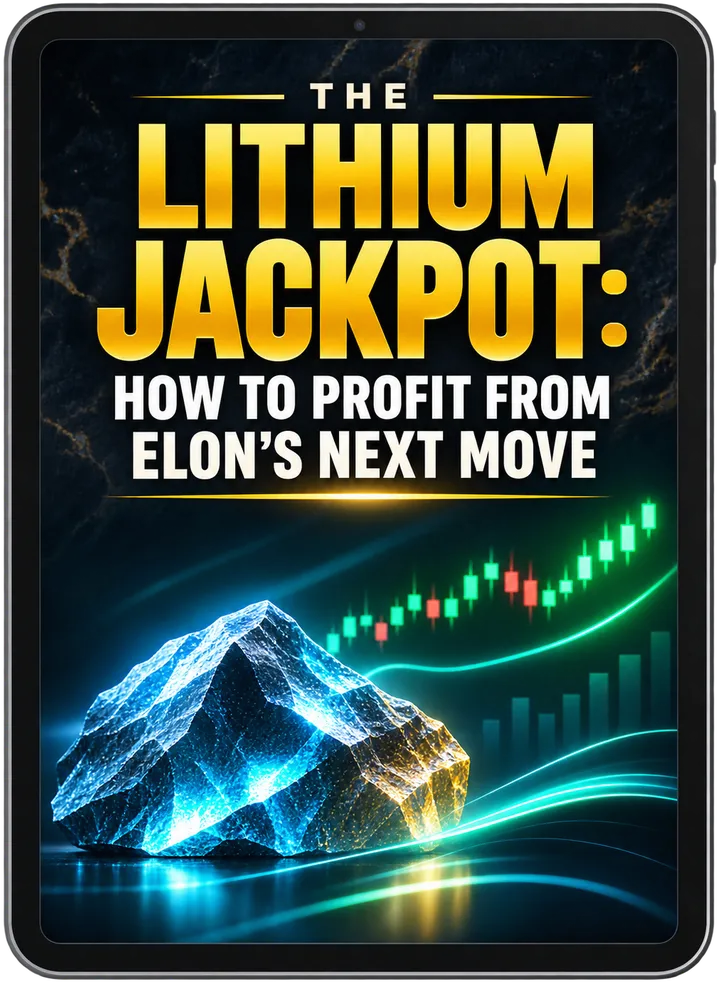
I will give you:
A name alone doesn’t tell you what to pay, what to watch for or when to sell. This report does.
And I want to send it to you today, absolutely risk-free.
Your Invitation to Behind the Markets

I built Behind the Markets for one simple reason. To level the playing field.
For the last 35 years, I’ve used my experience as a market maker and institutional investor to find the stocks that Wall Street is ignoring.
We don’t chase hype.
We don’t gamble.
We hunt for dislocation. Moments where the market is wrong, and we are right.
Today, Behind the Markets is one of the fastest-growing independent financial research services in America.
When you join us, you stop guessing.
You stop worrying about what the Fed is going to do next week.
And you start investing with the confidence of an insider.
Here Are the 3 Steps to Take Before December 31st
I want to make sure you have every tool you need to execute the Lithium Jackpot strategy and navigate the year ahead.
Step 1: Get Into the Lithium Boom NOW.
I’ve already given you the free ticker, LIT, one ticker for the whole lithium boom.
But “The Lithium Jackpot” gives you the REAL play. The name, ticker, buy-up-to price, and exit strategy for the small company sitting on part of Elon’s $1.6 Trillion Hidden Treasure.
Have it in hand before the go-ahead, and you can buy ahead of the news. Wait, and you’ll be buying after everyone else.
Read it first. Then put the plan to work.
Step 2: Build Your Position Around AI’s Hunger for Power.
AI’s hunger for power is why Elon backs up his supercomputers with walls of batteries. And it’s pushing America’s power companies to add batteries faster than ever.
Inside the bonus report, “America’s AI Power King: The One Stock Powering the Entire AI Boom,” I name the power company I believe leads them all. And I lay out why I rate it a buy, with the numbers behind it.
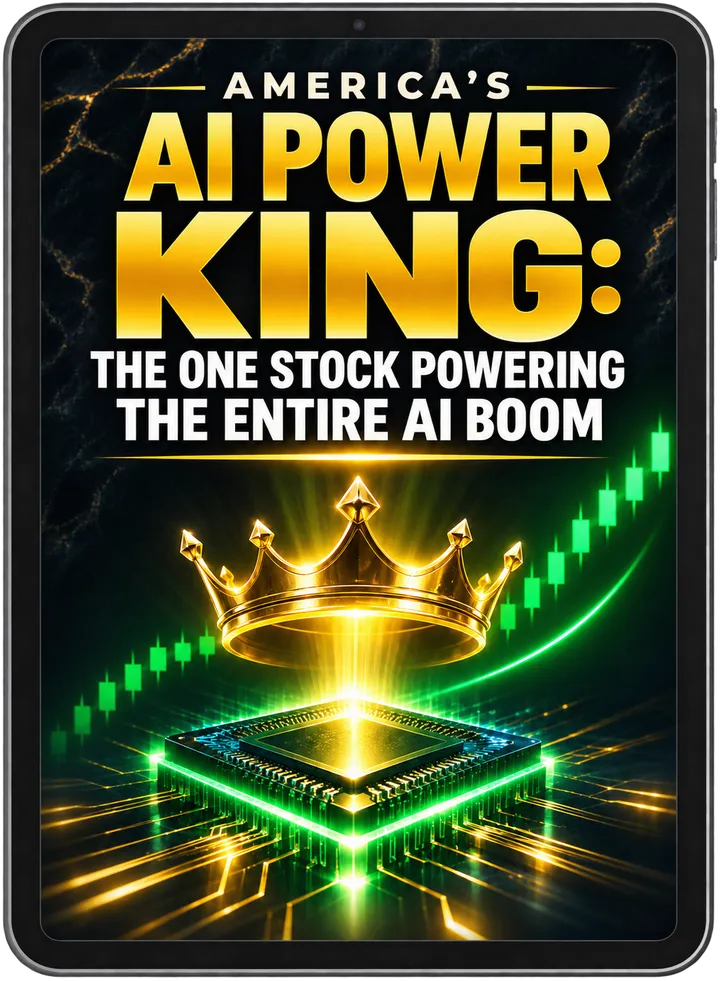
It’s the world’s largest generator of wind and solar power. And it runs the world’s largest portfolio of contracted renewable energy and battery storage.
Its Florida utility serves about 6 million customer accounts and adds more than 90,000 every quarter. Its data center target is up by a third, and battery storage is the fastest-growing piece of its project backlog.
It’s targeting earnings growth of at least 8% a year through 2032. And it has raised its dividend for more than 20 years.
Here’s why you want both.
The lithium company sits at the very start of the battery chain. It’s a company getting ready to build, with the most upside of anything in this strategy.
The power company sits at the far end.
It plugs batteries into the grid and gets paid for the electricity AI needs, day after day. And it pays you a growing dividend while you wait.
One is built for the repricing. The other collects on the build-out as it happens.
Together, they put you on both ends of the same boom.
Step 3: Stay Locked In Through December 31st and Beyond.
This story won’t stop on December 31st. The go-ahead, the financing and the rules tightening again every January through 2030 will each bring decisions of their own.
Your membership includes everything you need to make those decisions as the story unfolds:
Real People, Real Results
I can tell you about my track record all day, but I prefer to let my readers do the talking.
These are regular folks who decided to take control of their financial future with Behind the Markets.
“Thanks a ton for Intelsat and Scotts. I will not hesitate even for one moment to place money on the recommendations from Dylan. I eagerly await the emails from Dylan.”
“Thank you for the Intelsat and Axon Enterprises! Jealous of your talent… grateful you are willing to share it with us. Please don’t stop!”
“…It has helped make my retirement a lot more secure and fun. I just bought a new car with my savings! Thank you to all your team!”
A Price That Removes All Barriers
I firmly believe that Behind the Markets offers better research than services charging $5,000 or $10,000 a year.
Considering our 73% win rate, 45.2% average return, and the depth of research, my publisher tells me that the fair market value for a subscription is $399 per year.
That’s the value listed on our order page right now.
And frankly, considering that a single trade recommendation like the one I’m giving you today could pay for that subscription 100 times over, $399 is a bargain.
But I know that “trust is earned.” You might not know me yet.
I want to remove every single barrier standing between you and Elon’s hidden treasure.
I don’t want price to be the reason you miss out.
So, for a limited time, I am authorizing a massive discount for new subscribers.
You won’t pay $399.
You won’t even pay half that.
If you act right now, through this specific page, you can join Behind the Markets for one full year for just $49.
That is not a typo. $49.
That breaks down to about 13 cents a day.
$49
About 13 cents a dayIt’s less than the cost of a sandwich.
For just $49, you get a full year of my research. That includes “The Lithium Jackpot,” with the name and ticker of the small company sitting on part of Elon’s hidden treasure, and the bonus report, “America’s AI Power King.”
What you choose to invest in the stocks is separate, and it’s always your decision.
Why Is It So Cheap?
It’s simple.
I know that once you start reading my research and seeing the results in your own brokerage account, you will be a subscriber for life.
I am willing to lose money on this upfront offer just to get my foot in the door and prove my value to you.
But I can’t keep this offer open forever.
My “Ironclad” Double Guarantee
You can put my research to the test for 6 full months. If it doesn’t earn its place, I’ll refund every cent of your $49 subscription fee.
Guarantee #1: The 100% Satisfaction Promise
Sign up today. Pay the $49.
Download “The Lithium Jackpot.” Use my service for the next 6 full months.
If at any point you aren’t completely thrilled with your subscription, if you don’t feel like this was the best $49 you ever spent, simply contact our customer service team. We will refund 100% of your $49 subscription fee.
Guarantee #2: You Keep Everything
Even if you ask for a refund, you can keep the reports. You can keep the research.
You can keep the ticker symbols. They are yours to keep as my way of saying “thank you” for giving us a try.
We are in the final stretch before December 31st.
Washington’s deadline increases the pressure on battery builders. The company’s year-end target puts its own next major decision on the calendar.
And its partner’s cash payment rides on the timing of that decision.
A buyout would be a separate payoff, on Elon’s own clock.
You have two choices right now:
Close this page. Ignore the research.
Go back to reading the mainstream headlines. Watch from the sidelines as the bar rises and the company’s go-ahead hits the news, and wonder “what if” while others make the gains.
And if Elon makes his move, read about the premium after someone else has collected it.
Or click the button below. Your $49 covers a full year of my research, and it’s fully refundable for 6 months.
Get the tickers. Position yourself in front of Elon’s next move.
One trade could change your financial life.
I think the choice is clear.
I’m ready to help you build your wealth. Are you with me?
Frequently Asked Questions
Below, I’ve answered the most common questions I get from new subscribers.
What will I receive when I join today?
Everything.
Immediately.
The moment you subscribe, you’ll get “The Lithium Jackpot” special report with the company name, ticker, my valuation, buy-up-to price, milestones to watch and exit strategy.
Plus the bonus report, “America’s AI Power King.”
You also get 12 monthly issues, weekly portfolio updates, urgent trade alerts, and full access to our members-only website and archive.
All for $49.
If Elon needs this lithium so badly, why hasn’t he bought it already?
This year has brought several pieces of the commercial business into place.
The groundwork came first. For 6 years, its demonstration plant has pulled lithium out of salty water from deep underground, with serious money behind it.
This year, 2 global buyers signed binding contracts for most of its first plant’s output. Its lithium was made into LFP battery material and tested in cells, and federal regulators finished their environmental review.
What’s still ahead is the loans and the go-ahead to build, targeted for the end of this year. Then construction, and the plant itself.
The proof was already there. Now there’s a business worth buying.
And remember Elon’s playbook. When he can’t live without something, he ends up owning it.
Elon hasn’t made his move yet.
That’s exactly why you still can.
Tesla talked to ExxonMobil about Arkansas lithium. Doesn’t that make Exxon the play?
Exxon tells you how valuable this resource is. It isn’t the way to profit from it.
ExxonMobil is one of the biggest companies on Earth. It earned $28.8 billion last year, and lithium doesn’t even get its own line in its results.
Its own 2026 climate report says it aims to be a leading North American supplier of lithium carbonate “by the first half of the 2030s.”
Even if that succeeds, lithium will be a small piece of a giant. I don’t expect Exxon’s stock to be repriced on lithium.
The company I’ve found is the opposite.
Lithium is all it does. So every step its project takes forward shows up in its own stock.
It already has what a buyer would pay for: signed customers for most of its first plant’s output, an engineering study that’s done and the operator’s seat on 2 projects.
And it’s small enough for Elon to buy with pocket change. Exxon isn’t.
You can own it today, through any brokerage account.
How much money could I make with this strategy?
My analysis says the company’s stock could climb to 10 times today’s price. At that price, a $10,000 stake held all the way would be worth $100,000.
In the last lithium boom, Pilbara Minerals went even further. It rose 1,856% in 3 years.
Here’s where the 10 times comes from. On the company’s own studies, the 2 projects put each share’s value at nearly 7 times today’s price.
The first project alone supports about 2 times today’s price. The bigger second project, still at an early stage, supplies the rest.
Add the years both projects could keep producing beyond their 20-year studies, and price lithium at the top of the range the first study tested, and my analysis reaches 10 times today’s price.
My plan takes profits on the way up, and the report shows exactly where. Followed step by step to that price, it turns $10,000 into about $67,200 before costs and taxes.
That’s less than holding every share, but the plan buys you something holding can’t. The very first sale banks more than your entire original stake.
The second payoff is a buyout. It works differently.
A sudden premium, paid all at once, on the day a deal is announced. Tesla paid 55% more than Maxwell’s last closing price.
The two payoffs are separate. Either one could pay you on its own.
All investing involves risk, and past performance does not guarantee future results.
My track record includes massive winners like 646% on American Express and 250% on Scotts Miracle Gro, and not every trade is a winner.
That is why my plan banks profits on the way up.
A year of my research costs $49. The potential payoff from the stocks could change your retirement.
Is my order secure?
Absolutely.
We take your security and privacy as seriously as we take our research.
When you click the button to subscribe, you will be taken to a secure order page.
We use 256-bit SSL (Secure Socket Layer) encryption technology to protect your information.
Your credit card information is encrypted immediately and is never stored on our servers in a readable format.
And we respect your privacy.
We will never sell, rent, or trade your email address or personal information to third parties.
You are joining a private community, and your data stays with us.
You will not be spammed by outside marketers.
What if I decide this isn’t right for me?
I understand that skepticism is healthy.
That is why I have removed 100% of the risk from this transaction.
You are protected by my Ironclad 6-Month Money-Back Guarantee.
If at any point in the next 6 months you decide Behind the Markets isn’t for you, maybe you don’t like my writing style, maybe you disagree with a pick, or maybe you just had a bad day, simply contact our customer service team.
We will refund 100% of your $49 subscription fee.
And here is the best part. You keep the reports.
You keep “The Lithium Jackpot.” You keep the library.
You have literally nothing to lose.
This sounds too good to be true. What’s the catch?
I appreciate the candor.
If I were you, I’d be asking the same thing.
You’re getting a service valued at $399, plus research reports valued at $199 each, all for just $49.
Why would I do that?
There are two reasons.
The only “catch” is that this offer is temporary.
When it ends, the subscription goes back to full price.
Can I speak to someone if I have questions?
Yes, absolutely.
We are real people located right here in the United States.
While we cannot give personalized investment advice (we are publishers, not individual financial planners), our Customer Care team is available to help you with any questions about your subscription, accessing the website, or finding the reports.
When you reach out, you will hear from a real human being who is dedicated to helping you get the most out of your membership.
We pride ourselves on treating our subscribers like family.
How long until I receive everything?
You will receive everything instantly.
Because Behind the Markets is a digital research service, there is no waiting for the mailman.
The second you click the “Subscribe” button and complete your order, our system will automatically send a Welcome Email to your inbox.
This email will contain:
The direct download links for “The Lithium Jackpot” and “America’s AI Power King,” so you can get both ticker symbols immediately.
Your unique username and password for the members-only website.
The most recent monthly issue and weekly update.
You can be reading the report and placing your first trade less than 5 minutes from right now.
The opportunity is sitting right in front of you.
The clock is ticking toward December 31st.
Let’s get started.
The Final Decision
We are standing at the edge of something I’ve never seen.
In my 35 years on Wall Street, I have seen a lot of trends come and go.
I’ve seen the Dot-Com boom.
I’ve seen the Housing Bubble.
I’ve seen the Crypto craze.
But I have never seen a man build so much of his future on a metal he still has to buy from someone else.
That’s what I found when I started digging after that dinner at The Breakers.
Elon’s robots, his cars and his Megapacks all run on lithium. His supercomputers lean on walls of lithium batteries.
By Tesla’s own math, the world will need about 4 times as much lithium a year as every mine on Earth produced last year.
And China controls most of what happens to it before it reaches him.
Now look at what’s sitting under southwestern Arkansas.
A treasure the government’s own scientists mapped. By my math, it’s worth up to $1.6 trillion in the ground at today’s price.
And one small company sitting on part of it, with an extraction process that recovered 95.4% of the lithium over 4 months of continuous operation.
The commitments are already in place. Signed buyers for most of the first plant’s output, a finalized federal construction grant, an energy giant invested as its partner and more than $100 million from big investors.
What’s ahead is what moves the stock. The loans are in review with government-backed lenders, and the go-ahead to build is targeted for the end of this year.
And on January 1st, the rules tighten again for battery builders.
And there are 2 ways this can pay you.
Wall Street can reprice the business one milestone at a time. Or a buyer like Elon can move first and pay a premium all at once.
You now have a clear roadmap to profit either way.
I’ve given you the “free play.” LIT.
The whole lithium boom, in one investment.
If you do nothing else today, buy shares of that fund.
It will likely treat you well.
But if you are serious about building generational wealth, if you want the kind of returns that can pay off a mortgage or fund a comfortable retirement, you cannot stop there.
The real money isn’t in the fund. The real money is in the small company sitting on part of Elon’s $1.6 Trillion Hidden Treasure.
It’s in owning a piece of the American lithium source I believe Elon wants to control.
Everything you need to act on it is in “The Lithium Jackpot.” The name, my valuation, the most I’d pay, the milestones to watch and when I’d sell.
Here’s what waiting costs you.
Once the go-ahead is announced and the money to build is in place, this project stops being a plan. It becomes a plant under construction.
I believe that’s when Wall Street starts paying up for it.
Every week you wait brings you closer to paying Wall Street’s price instead of today’s.
And if a buyer moves first, the premium could arrive overnight.
Elon Musk moves at the speed of thought.
By the time you read about a deal in the Wall Street Journal, the gap-up will have already happened.
And the first group will be holding shares that cost them a fraction of your price.
Don’t let that happen.
Click the Button Below RIGHT NOW
You have two paths in front of you.
Path #1: You can close this page.
Go back to your daily routine.
Watch from the sidelines as the news cycle heats up.
Watch the bar rise on January 1st, and see the headlines about Elon’s battery empire.
Watch the go-ahead hit the news as Wall Street starts paying up for American lithium, and watch the stocks I’ve identified gap up overnight.
And then ask yourself, “Why didn’t I act when I had the chance?”
Path #2: You can take action.
Right now.
In the next 5 minutes.
Click the button below.
Complete your $49 subscription.
In 5 minutes, you’ll have the ticker symbol in your hands.
In 5 days, you could be positioned ahead of 99% of investors.
Wait too long, and you may be reading about this opportunity in the Wall Street Journal, after the earlier price is gone.
If you missed out on Amazon in 1997…
If you missed out on Tesla in 2010…
If you missed out on Nvidia in 2016…
If you watched Pilbara Minerals soar 1,856% in the last lithium boom and did nothing…
If you watched Cheniere soar 718% after it signed its first buyer, before it shipped a single cargo, and told yourself “next time”…
This is next time.
Do not miss this.
History rarely gives you a second chance.
But today, the market is handing you another shot.
The countdown to December 31st has begun.
On January 1st, the bar rises.
Elon hasn’t made his move yet.
If the company I’ve found follows the path Pilbara carved in 3 years, a $10,000 stake held all the way could grow to about $195,600.
That’s money that can pay down a mortgage, put a grandchild through college or give your retirement real breathing room.
Forward-looking estimate based on historical comparable. Not guaranteed.
And I believe this company is even earlier in the cycle.
A year of my research, with the complete investment case inside, costs $49. What you invest in the stock is always your decision.
That’s $49 for the plan I’d want in my own hands before putting a single dollar into this stock.
A year from now, looking back at this moment, you will either be kicking yourself for doing nothing, or your children and grandchildren will look back and say, “That was the moment everything changed for our family.”
That was the day you got in on Elon’s $1.6 Trillion Hidden Treasure before December 31st.
That moment starts with what you do next.
Click the button below and claim “The Lithium Jackpot.”
Put the company’s name, my valuation and my buying instructions in your hands today.
Make your decision before December 31st, while the milestones I’m tracking are still ahead.
I know which path I’d choose.
Click the button below RIGHT NOW and I’ll see you on the inside.
Sincerely,